
Most Spotify Promotion Services Are Scams. Here Are the Exact Red Flags That Give Them Away.
An independent artist's guide to separating legitimate playlist promotion from the services designed to take your money and disappear.

PART 1 — THE INDUSTRY HAS A PROBLEM (AND YOU'VE PROBABLY ALREADY FELT IT)
You Already Know Something Is Off. You're Right.
You search 'Spotify playlist promotion' and within thirty seconds you're drowning in options.
Websites that all look the same. Guarantees that sound identical. Prices that range from $15 to $1,500 for what seems like the same service.
And underneath every polished landing page, the same nagging question:
"Is this real? Or am I about to get robbed?"
That instinct is correct. The playlist promotion industry is one of the most unregulated, scam-saturated corners of the music business. Fake playlists, bot streams, click farms, and services that simply vanish after payment are everywhere — and they've burned enough independent artists that many have sworn off promotion entirely.
A 2023 analysis found that over 60% of third-party playlist promotion services deliver streams that Spotify classifies as artificial. That means the majority of what's being sold out there will either not count toward your streams or actively put your account at risk.
But here's what the skepticism misses: the strategy itself — getting your music onto real playlists with real listeners — is not only legitimate, it's how the Spotify algorithm is designed to work. Major labels have used it for years. Independent artists who understand the difference between real and fake promotion are seeing genuine growth.
The problem isn't playlist promotion. The problem is knowing how to spot the frauds.
This article is going to show you exactly how to do that.
PART 2 — HOW THE SCAM SERVICES ACTUALLY WORK
They're Not Stupid. They've Built an Entire Machine to Look Legitimate.
Most fraudulent playlist services aren't amateur operations. They've studied what trust looks like and reverse-engineered it. Here's what's actually happening behind the scenes:
The Bot Network
Fake services use networks of compromised or fabricated Spotify accounts to generate stream counts. These accounts are run programmatically — they 'listen' to your track, hit the 30-second mark, and move on. They inflate your numbers without triggering any of the engagement signals (saves, repeats, playlist adds) that Spotify's algorithm actually uses to evaluate a song's potential.
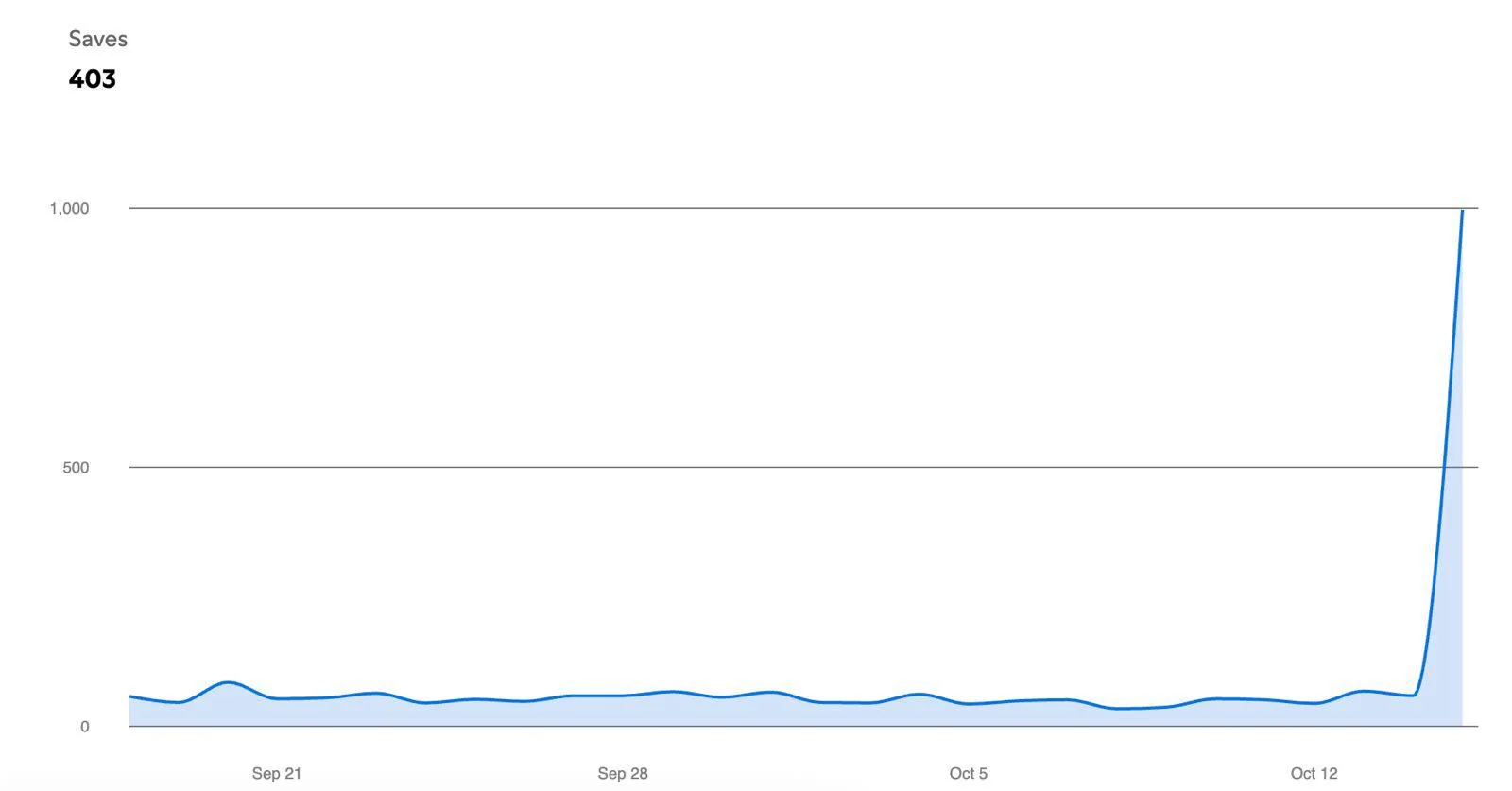
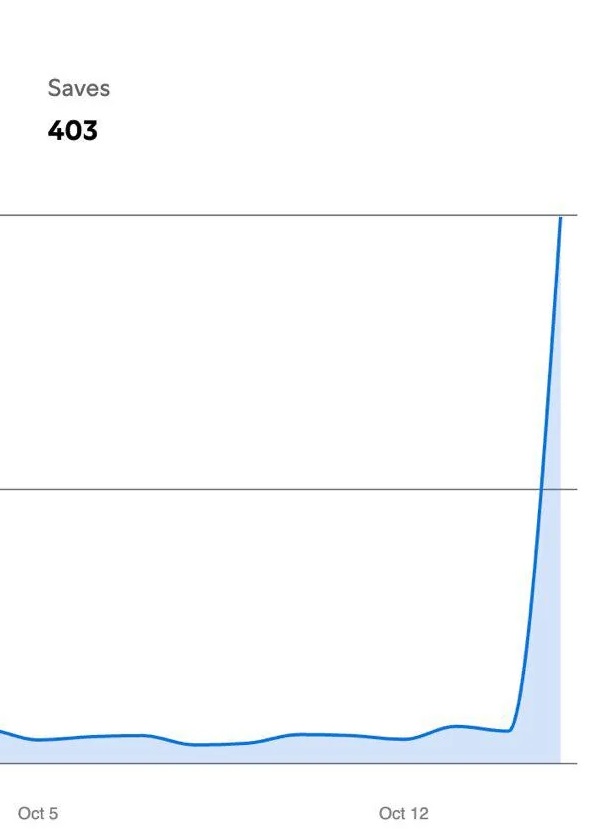
Fig 1. The classic signature of a bot network: an unnatural spike.
The Vanity Playlist
Some services operate real Spotify playlists — but the followers are bought. They'll show you a playlist with 50,000 followers. What they won't show you is that those followers are inactive accounts that were purchased in bulk. Nobody is listening. The 'placement' is meaningless.
The Copycat Playlist
A more sophisticated version of the above: a service creates playlists with names and cover art mimicking popular official playlists — 'Today's Top Hits', 'Mood Booster', 'Chill Vibes' — and stuffs them with a mix of major artists and paid indie tracks. The logic is that real users might stumble onto these playlists by accident. Even if they do, the engagement data is diluted and non-targeted. Your song sits next to Drake and gets skipped immediately.
The Disappearing Service
Some operators simply take payment, deliver nothing or deliver bots for a few days, then shut down the website and relaunch under a new name. The barrier to entry is low. A new domain, a new logo, recycled copy — and they're back in business targeting fresh victims.
The good news: every one of these fraud patterns leaves fingerprints. Once you know what to look for, they're not hard to spot.
PART 3 — THE RED FLAGS: WHAT TO LOOK FOR BEFORE YOU PAY
Run Every Service Through This Checklist Before Handing Over Money.
Any service that promises you '10,000 streams guaranteed' or '5,000 plays in 7 days' is delivering fake traffic. Legitimate playlist promotion depends on real human behavior — curators deciding to accept your track, real listeners choosing to stream it. No honest service can guarantee a specific number because real engagement can't be scripted. If they're guaranteeing numbers, they already know where those numbers are coming from. And it's not real listeners.
Legitimate playlist promotion requires real work: curator relationships, genre matching, quality vetting, campaign management. That infrastructure costs money to build and maintain. When you see packages for $10, $15, or $25 promising hundreds of placements, the math doesn't work unless the placements are fake. You're not getting a deal. You're getting bots at bulk rate.
Before you pay, a legitimate service should be able to tell you — or show you — the kinds of playlists your song will be considered for. Follower ranges, genre categories, curator vetting criteria. If a service can't or won't tell you where your music is going, it's because the answer would reveal something they don't want you to know. 'We have a network of playlists' with no further detail is not transparency. It's a deflection.
Scam services either have no third-party reviews at all or they have reviews that read like they were written by the same person — vague, generic, suspiciously perfect. Legitimate services accumulate real reviews from real artists over time, on platforms they don't control (Trustpilot, Google). Before paying, search the company name plus 'review' or 'scam'. Look for reviews that mention specific results, specific genres, specific timelines. Generic praise with no detail is a red flag.
This is the pattern you see after using a bot service: a sudden spike in streams over two or three days, then a cliff. No sustained growth. No increase in monthly listeners. No saves or follows. If a service delivered real listeners who genuinely liked your music, you'd see a gradual, sustained curve — because real fans come back. A spike with no tail means robots showed up, hit play once, and left.
Real curators maintain playlists for specific audiences. A curator running an indie folk playlist for 40,000 listeners has spent years building that audience's trust. They won't accept just anything — they'll only add tracks that actually fit the sound their listeners expect. If a service accepts your submission within minutes with no questions asked about your genre, tempo, vibe, or target audience, they're not sending your song to real curators. They're feeding it to a content farm.
Legitimate services stand behind their work because they know what they're delivering is real. Fraudulent ones bury their terms in vague language, offer 'store credits' instead of refunds, or simply have no policy at all. Before paying, find the refund policy. If it doesn't exist or is written to be impossible to use, treat that as the answer to whether this company can be trusted.
PART 4 — WHAT A LEGITIMATE SERVICE ACTUALLY LOOKS LIKE
The Green Flags: How to Recognise a Service You Can Trust
Source of streams
Last 28 days
Fig 2. The mathematical signature of success: algorithmic traffic overtaking manual placements.
Now that you know what to avoid, here's the other side of the equation. A legitimate playlist promotion service will show you most or all of these signals:
Legitimate services don't just claim their playlists are real — they verify them. The best ones use AI-based tools to continuously audit playlist activity for signs of bot behavior, fake followers, or artificial engagement. If a service can tell you exactly how they verify their network, and can show you evidence of that process, that's a significant trust signal.
The best services work with human curators who have grown their audiences organically over time. These aren't anonymous operators with bulk-purchased follower counts — they're music fans who built real playlists for real listeners. A service that can speak to its curator vetting process and explain how long they've worked with their network is demonstrating that real infrastructure exists.
When a service asks about your genre, tempo, mood, and influences before accepting your submission — that's a green flag. It means they're thinking about fit, not just volume. Your pop track should land on pop playlists. Your lo-fi instrumental shouldn't end up mixed into a hip-hop playlist with zero overlap in audience.
After your campaign, you should be able to see exactly which playlists your song was added to, how many followers those playlists have, and how your Spotify metrics moved during the campaign. Anything less than full transparency is a reason to ask harder questions.
Real algorithmic impact requires sustained engagement — not a two-day burst. Services that keep your track on playlists for weeks or months are giving Spotify's algorithm the continuous signal it needs to start picking up your song organically. Services that pull your track after 48 hours are optimizing for their own cost structure, not your results.
Hundreds of real reviews on Trustpilot, written by artists with similar profiles to you, describing specific results over specific timeframes — that's what legitimate social proof looks like. It can't be faked at scale. Look for it before you pay anything.

PART 5 — ONE SERVICE THAT PASSES EVERY TEST
We Applied This Checklist to Imperium Network. Here's What We Found.
After everything in this article, you deserve a concrete answer. So here it is:
Imperium Network is one of the very few playlist promotion services that passes every flag on this list. Not because we're saying so — because the evidence is public and verifiable.
Bot-Free Verified Playlists — Every playlist runs through AI-based verification. Signs of suspicious activity get cut immediately, before your song ever goes near them.
Real Curators With Real Audiences — No bought followers. No engagement farming. Curators have grown their playlists organically, with listeners who are genuinely there for the music.
Genre-Specific Matching — Your submission is reviewed before placement. Your song goes where it actually belongs — with listeners who already love that sound.
Transparent Reporting — You see every playlist your track is added to, follower counts, and how your metrics are moving. Full visibility. No black box.
Long-Term Placements — Tracks stay live for weeks or months, giving Spotify's algorithm time to register sustained engagement and start pushing organically.
300+ Verified Trustpilot Reviews — Written by real artists, describing specific results. Go read them before you buy anything. They're all there.
100% Satisfaction Guarantee — If it doesn't deliver, you're covered. That's what a service with confidence in its own product looks like.
Excellent
Based on 300+ reviews
Fig 3. Independent verification is the only metric that matters. Over 300 artists have publicly documented their results.
Prices start at $45. That's less than a single recording session — and unlike studio time, the results compound. Real streams trigger algorithmic placement. Algorithmic placement brings more real listeners. More listeners become followers and fans.

Fig 4. The internal analytics for Avan Haven following a verified playlist campaign. A 1,300% sustained increase.
Artists like Avan Haven, Emilio M., and Marlo J. King didn't get results because they got lucky. They got results because they used a service that delivered real engagement to the Spotify algorithm — and let the algorithm do the rest.
STILL HAVE QUESTIONS? FAIR ENOUGH.
"I've been burned before. How is this different?"
The difference is verifiable. Check the Trustpilot page — 300+ reviews from real artists with specific results. Read about the AI-based playlist verification. Look at the transparent reporting. Everything that separates a real service from a scam is visible before you pay a cent.
"I've been burned before. How is this different?"
The difference is verifiable. Check the Trustpilot page — 300+ reviews from real artists with specific results. Read about the AI-based playlist verification. Look at the transparent reporting. Everything that separates a real service from a scam is visible before you pay a cent.
"Can't I just submit to SubmitHub myself for free?"
You can. SubmitHub requires buying credits, has high rejection rates, and most independent curators on the platform have small followings. It can work as part of a larger strategy but it won't generate the kind of sustained, genre-matched engagement that moves Spotify's algorithm. Different tool for a different job.
"Is playlist promotion actually allowed by Spotify?"
Organic playlist placement — real curators adding songs they genuinely want on their playlists — is exactly how Spotify intends music to be discovered. Major labels have used this strategy since day one. What Spotify prohibits is artificial streaming, bot activity, and fake engagement. Imperium operates entirely within Spotify's terms of service.
Now you know exactly what to look for.
There's one service that passes every test. Here's where to start.
VERIFIED PLAYLISTS • REAL LISTENERS • TRANSPARENT REPORTING • 100% SATISFACTION GUARANTEE
You don't need to gamble. You need to know what you're paying for.